How Lithium-Ion Battery Storage Is Revolutionizing Home Energy Independence

Today’s electrical grid was built for a different era. Demand was easier to predict, large energy users were less common, and the system was not under the same level of strain it faces today. For many years, that was enough. Most homeowners never had to think much about how the grid worked.
That is changing. Electrification is accelerating. Electric vehicle adoption continues to grow. Large-scale energy users such as data centers are adding new pressure to supply. Weather patterns are also becoming less predictable, with some regions facing drought while others experience stronger storms that disrupt power.
The way people use electricity at home has also shifted. More work is done remotely, which increases the need for consistent power. When outages occur, they affect more than convenience. They interrupt work, communication, and essential household systems.
Utilities continue to invest in infrastructure, but upgrades take time, and demand is evolving quickly. Electricity pricing is also becoming more variable, especially during peak demand periods. That is one reason lithium-ion battery storage is becoming more common: it stores energy and makes it available when it is needed. For homeowners, that can mean maintaining power during outages, reducing reliance on the grid during peak periods, and having more control over how energy is used throughout the day.
From Passive Use to Active Control
Most traditional energy systems operate in one direction. Power is generated at centralized facilities and delivered to homes through transmission and distribution networks. The home uses what it needs and is billed afterward.
Battery storage changes that structure. With a lithium-ion system, a home can store energy and determine when it is used. Electricity generated during the day can be saved and used later. Power can also be drawn from the grid when rates are lower and used during higher-cost periods.
This gives the home more control over its own supply. Instead of sending excess energy back to the grid and relying on it later, more of that energy is kept and used when it is needed.
Why Lithium-Ion Became the Standard

Lithium-ion batteries have become the preferred option for residential energy storage. Their high energy density allows them to store more energy in a compact footprint. They also operate efficiently with minimal loss and maintain performance over thousands of cycles, which makes them well suited for daily use in a home environment.
Earlier technologies such as lead-acid batteries were limited by shorter lifespans and lower usable capacity. While the upfront cost may be lower, performance tends to decline over time. Advances in lithium chemistry have improved both safety and durability, with lithium iron phosphate systems known for their stability and long cycle life.
These characteristics have led lithium-ion batteries to account for the majority of new residential storage installations.
Designing Smarter Energy Systems at Home
Home energy demand is rising with EVs, heat pumps, and always-on appliances. Batteries now anchor these modern systems.
A battery on its own is only part of the equation. Its real value comes from integration with solar panels and smart home management. When designed right, excess daytime solar production gets stored for nighttime use or outages, cutting grid reliance when power costs more or supply falters.
Smart load management is what makes this work. Instead of powering everything at once, the system prioritizes key circuits and adjusts usage based on real conditions. This extends runtime during outages and allows the system to shift energy use away from higher-cost periods.
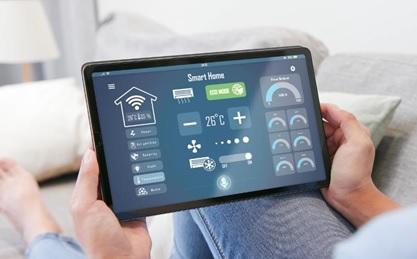
These decisions are handled across the system. The battery manages when energy is stored and discharged. A smart electrical panel or load management system controls which circuits are powered and when. Monitoring software gives visibility into what the home is producing and using and allows the system to respond to changing conditions.
When these pieces are designed to work together, the home becomes more deliberate in how it uses energy. Power can be reserved for essential loads during an outage and used more strategically throughout the day. This is what separates a basic backup system from a well-designed energy system.
Energy independence does not mean going off-grid. It means having control over how and when energy is used, maintaining essential functions during outages, and reducing exposure to peak pricing. Many of these adjustments now happen automatically, creating a more stable and predictable experience for homeowners.
How to Think About the Value of Battery Storage
The value of a battery is shaped by how it is used within the home. As utilities adopt time-of-use rate structures, electricity prices can vary significantly throughout the day. A properly designed system allows energy to be stored when it is more available and used later when demand and pricing are higher.
This creates an opportunity for homeowners to reduce exposure to peak rates, but it is not the primary reason most systems are installed.
For many homeowners, the decision is driven by reliability. A battery provides continuity during outages and introduces a level of predictability that is difficult to achieve when relying entirely on external infrastructure.
Over time, rate structures are expected to become more dynamic and increase during peak demand periods. The ability to control when and how energy is used is now more valuable. The financial impact will vary by home and utility, but the underlying benefit is consistent: greater control, greater stability, and less dependence on changing grid conditions.
How to Get the Most from Your Lithium-Ion Battery
A battery system is only as effective as the way it is designed and integrated into your home. Getting the most from your system is not about selecting the largest battery available, but about ensuring it is configured to match how your home uses energy.
To achieve that, several key factors should be considered:
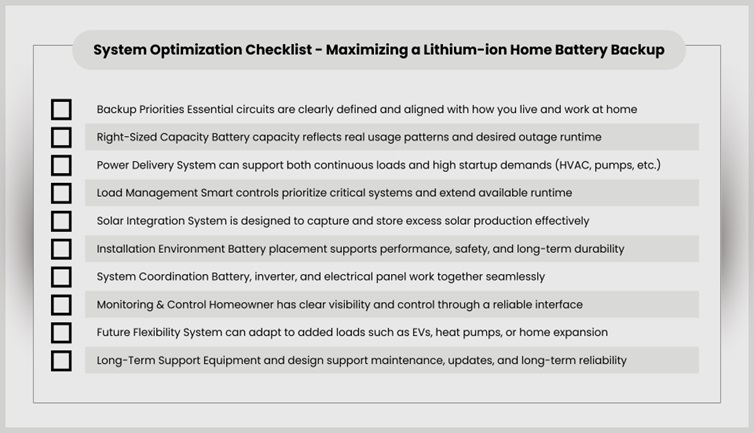
Getting these details right is what separates a basic backup system from one that performs consistently over time. A well-designed system does not just store energy. It uses it intelligently, adapts to changing conditions, and continues to meet your needs as your home evolves.
Looking Forward: A Smarter Approach to Energy at Home
Lithium-ion battery storage is becoming more common as the demands placed on the grid continue to change. It offers a way to maintain power during outages, adjust how energy is used throughout the day, and reduce reliance on the grid during peak periods.
The performance of these systems depends less on the equipment itself and more on how well everything is designed to work together. When batteries, solar, and load management are aligned, energy can be used more deliberately and with fewer interruptions.
The grid will continue to evolve, shaped by growing demand and changing usage patterns. As that happens, battery storage is likely to play a larger role in how homes manage energy.
What was once a passive system is becoming more responsive. Homes are no longer defined only by how much energy they consume, but by how effectively that energy is managed.