
AST Maintenance in Corpus Christi: Keeping Your Tanks Running in One of Texas’s Toughest Environments
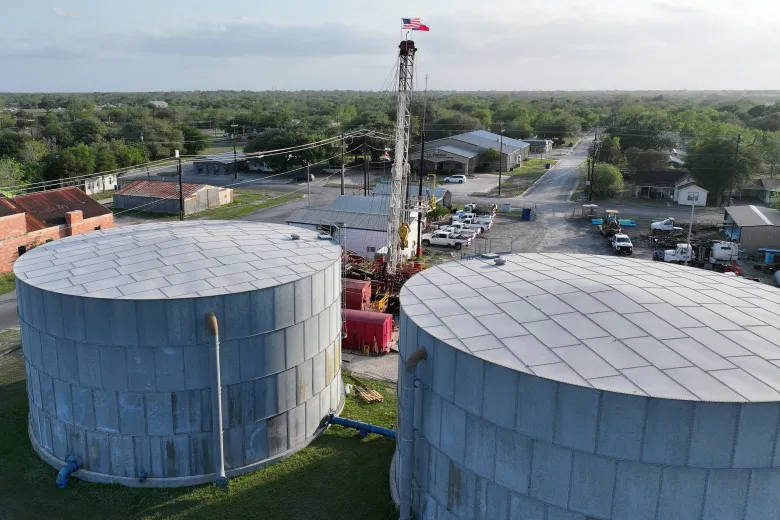
Corpus Christi sits at the intersection of heavy industrial demand and some of the most corrosively aggressive environmental conditions on the Gulf Coast. The city’s port complex is among the busiest in the United States for crude oil exports, and the surrounding region hosts a dense network of refineries, petrochemical facilities and fuel distribution terminals that depend on aboveground storage tanks operating reliably day after day. Maintaining those tanks in Corpus Christi isn’t simply a matter of following a standard checklist. It requires a maintenance program calibrated specifically to what the local environment does to steel, coatings and foundations over time, and to what the regulatory framework requires of owners who want to stay in good standing with state and federal oversight agencies.
Why Corpus Christi Demands More From Your Maintenance Program
The maintenance challenges facing AST operators in Corpus Christi are shaped heavily by geography. The city sits directly on the Gulf of Mexico, and the combination of salt-laden air, high humidity and intense UV exposure creates an external corrosion environment that’s measurably more aggressive than what inland Texas operators deal with. Salt particles carried on coastal winds deposit on tank exteriors continuously, and when moisture cycles through the surface, those deposits drive electrochemical corrosion that eats through coatings and into base metal faster than many operators anticipate when they set their initial inspection intervals.
Wind loading is another factor that distinguishes Corpus Christi from inland markets. The region sits squarely in the Gulf Coast hurricane corridor, and even storms that don’t make direct landfall generate sustained elevated winds and driving rain that stress external floating roof seals, vent systems, nozzle connections and stairway attachments. Operators who don’t inspect their tanks after significant weather events often miss developing problems until they’ve progressed into more costly repairs.
The local soil environment adds a third dimension. Corpus Christi’s coastal soils contain high chloride concentrations and variable moisture levels that drive under-bottom corrosion at rates that can surprise operators accustomed to inland conditions. A tank bottom that might last decades in a drier climate can develop significant corrosion in a fraction of that time if the cathodic protection system isn’t functioning correctly or wasn’t designed to match the local soil chemistry.
None of these challenges mean you can’t operate tanks safely and cost-effectively in Corpus Christi. They mean your maintenance program needs to be built around realistic assumptions about what this environment does to your assets, not generic industry averages drawn from less demanding locations.
The Regulatory Framework Governing AST Maintenance in Texas
AST maintenance in Corpus Christi sits within the same state and federal regulatory structure that governs the broader Texas market. The Texas Commission on Environmental Quality requires registration and ongoing compliance for tanks above applicable capacity thresholds storing petroleum products and regulated substances. Operators maintaining those tanks need to keep their TCEQ registrations current, document inspections and repairs accurately and notify the agency when certain repair activities or releases occur.
The federal Spill Prevention, Control and Countermeasure rule administered by the EPA establishes requirements for facilities above specified oil storage thresholds, including preparation and implementation of a written SPCC plan, secondary containment adequacy and periodic inspection documentation. SPCC plans aren’t static documents. They require amendment when you modify tanks, change stored products or make significant physical changes to your facility, and they need to be reviewed and certified by a licensed professional engineer at defined intervals.
The primary industry standard governing in-service AST inspection and maintenance is API 653. This standard covers the inspection, repair, alteration and reconstruction of welded steel atmospheric storage tanks and provides the technical framework most operators and regulators reference when evaluating whether a tank is being maintained adequately. API 653 establishes minimum inspection intervals, fitness-for-service evaluation methods, repair qualification requirements and the documentation that supports ongoing integrity management. Operators in Corpus Christi who align their maintenance programs with API 653 are building on a foundation that satisfies both practical engineering requirements and the documentation expectations regulators bring to facility audits.
External Inspection and Coating Maintenance
In Corpus Christi’s coastal environment, external coating maintenance is one of the highest-leverage activities in your entire AST maintenance program. A coating system that’s performing well is your first and most cost-effective barrier against shell and roof corrosion, and a coating system that’s failing is costing you metal every day it stays in service without repair.
Formal external inspections should be conducted at intervals your integrity management program defines, but in this market, walking your tanks regularly between formal inspection cycles pays dividends. You’re looking for coating failures including blistering, cracking, disbondment and rust bleed-through, as well as physical damage to ladders, platforms and nozzle connections from wind events or equipment contact. Catching a small coating failure early and addressing it with spot repair is orders of magnitude cheaper than letting it progress to a full external recoat or, worse, into a shell repair.
When the time comes for a full external recoat, surface preparation is the variable that most determines how long the new system will last. Abrasive blasting to the correct cleanliness standard, followed by application of the specified coating system within the surface profile and humidity windows the coating manufacturer requires, is what separates a coating job that lasts twenty years from one that starts failing in five. In a coastal environment where salt contamination of the substrate is a constant concern, soluble salt testing before and after surface preparation should be standard practice, not an optional add-on.
Roof maintenance deserves specific attention on tanks with external floating roofs. The primary and secondary seals at the roof perimeter are critical components that prevent product vapors from escaping and prevent rainwater from contaminating the stored product. These seals degrade with UV exposure, product contact and mechanical wear from roof movement, and in a market with Corpus Christi’s wind and weather intensity, they should be inspected on a schedule that reflects actual service conditions rather than a minimum interval set for milder environments. Roof drains on external floating roofs are another high-priority maintenance item. Clogged drains allow water to pond on the roof, adding weight and stress to the roof structure, and in an extreme case, a plugged drain combined with a major rain event can contribute to a roof sinking.
Internal Inspection and Bottom Plate Integrity
Internal inspections require taking the tank out of service, cleaning it to the standard required for safe entry and conducting a thorough assessment of the internal bottom, shell and roof. In Corpus Christi, where under-bottom corrosion risk is elevated by soil chemistry and coastal moisture, the internal bottom inspection is typically the most critical deliverable from an out-of-service inspection.
Ultrasonic thickness testing of the bottom plates produces a detailed map of remaining metal thickness across the entire floor. Qualified inspectors use this data to identify pitting, general corrosion and weld-line corrosion, and the measurements feed directly into the fitness-for-service calculations that determine whether the existing plates meet the minimum thickness requirements API 653 establishes. Where plates have corroded below acceptable minimums, you have the choice of overlaying new plate material on top of the original bottom or cutting out and replacing the affected sections. The right repair method depends on the extent and pattern of corrosion, the condition of the annular ring plates at the shell-to-bottom junction and the specifics of your foundation.
The shell-to-bottom junction is a location that warrants special attention in coastal markets. This is a zone of complex stress, potential coating discontinuity and elevated moisture exposure where external corrosion can progress rapidly if the coating system has failed at the chime. Internal inspection of the lower shell courses and the annular ring in this zone should be thorough, and any indication of pitting or thinning at the floor-to-shell interface needs to be evaluated carefully before the tank returns to service.
Internal lining systems for tanks storing corrosive products extend the service life of bottom plates and lower shell courses significantly, and the decision to apply or renew an internal lining is often best made in conjunction with the bottom plate inspection findings. If you’re already in the tank for an inspection and you’re seeing accelerating corrosion rates, evaluating a lining system while the tank is out of service is far more cost-effective than scheduling a separate future outage.
Cathodic Protection System Maintenance
Cathodic protection is one of the most frequently under-maintained elements of AST integrity programs, and in Corpus Christi’s aggressive soil environment, that’s a gap that shows up quickly in bottom plate condition. Whether your tank uses a sacrificial anode system or an impressed current system, the CP needs to be tested periodically to confirm it’s delivering adequate protection potential to the tank bottom.
Sacrificial anode systems require physical inspection to assess anode consumption and determine whether replacement is needed. Impressed current systems require testing of the rectifier output, reference electrode readings and structure-to-soil potential measurements to confirm the system is operating correctly and providing coverage across the full tank bottom. These tests are straightforward to perform but require a qualified cathodic protection technician and calibrated test equipment. Delegating CP testing to whoever happens to be doing routine yard maintenance isn’t an acceptable substitute.
If a cathodic protection system has been neglected for several inspection cycles, it’s worth engaging a corrosion engineer to evaluate both the current system performance and the bottom plate condition before the next scheduled internal inspection. The cost of that evaluation is modest compared to the cost of discovering during an internal inspection that accelerated corrosion has compromised a significant portion of the tank floor.
Repair Qualification and Documentation
Repairs to in-service or recently out-of-service ASTs aren’t governed by the same welding procedures and inspection requirements as new construction. API 653 establishes specific repair qualification requirements, and work performed by contractors who aren’t familiar with those requirements can create compliance problems and may not actually restore the tank to adequate fitness for service.
Repair documentation matters as much as the repair itself. Every significant repair needs to be documented with the scope of work, the welding procedures used, the welder qualifications in effect, the inspection and testing performed and the inspector’s findings and sign-off. That documentation becomes part of the tank’s permanent record and directly informs future inspection intervals and fitness-for-service evaluations. Operators who treat repair documentation as optional paperwork eventually find themselves unable to demonstrate compliance during a regulatory audit or unable to support the inspection interval calculations their integrity program depends on.
Building a Sustainable Integrity Management Program
The operators who get the most value from their AST maintenance spend in Corpus Christi are the ones who manage their tanks as a fleet rather than responding to each tank in isolation when something goes wrong. A structured mechanical integrity program tracks inspection history, corrosion rate trends, coating condition, CP performance and repair history for every tank in your inventory and uses that data to drive inspection scheduling, budget planning and risk prioritization.
In a coastal market where corrosion rates are genuinely elevated compared to inland benchmarks, a risk-based approach to inspection interval setting allows you to direct your inspection resources where the risk is actually highest rather than spreading them uniformly across tanks with very different service conditions, age profiles and corrosion histories. The API 653 framework supports risk-based inspection interval calculations, and working with a qualified inspection firm that understands how to apply those tools to Corpus Christi conditions will produce inspection schedules that are both defensible to regulators and genuinely reflective of your actual risk profile.
Selecting the right inspection and maintenance contractor for your Corpus Christi tanks means looking for experience that’s specific to coastal Gulf Coast conditions. A contractor who knows what accelerated salt-environment corrosion looks like, who understands the local soil chemistry and who has the relationships with TCEQ and the familiarity with Port Aransas and Ship Channel industrial operations to navigate the local regulatory and logistics environment is a fundamentally better fit for this work than a generalist who does occasional tank work across a broad geography. Your tanks will tell the difference over time.