
The Evolution of Modern Industrial Manufacturing Infrastructure and Systems
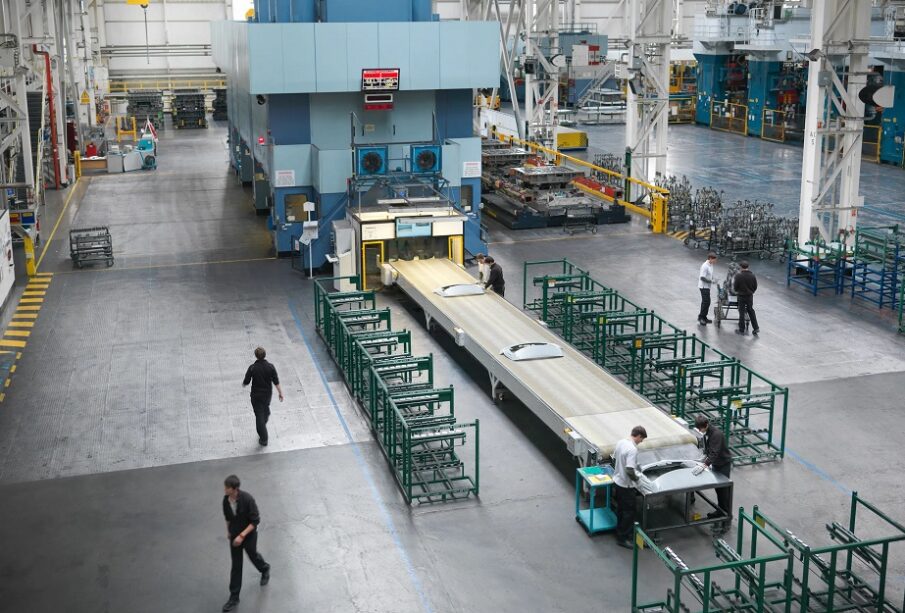
The global industrial sector serves as the backbone of modern civilization, transforming raw natural resources into finished goods, machinery, and infrastructure. Over the past several decades, the industrial landscape has shifted from purely mechanical assembly lines to highly integrated, digitally driven manufacturing ecosystems. This evolution, often referred to as the fourth industrial revolution, requires a sophisticated understanding of mechanical engineering, automated control systems, material science, and supply chain logistics.
For industrial enterprises to remain competitive in a volatile global market, they must systematically optimize their production facilities. This requires balancing operational efficiency with rigid safety protocols, robust predictive maintenance frameworks, and advanced material handling technologies. Examining the core systems that drive modern factories reveals the intricate engineering required to sustain large-scale industrial output.
Automated Control Systems and Industrial Robotics
Automation has redefined the speed, precision, and safety of industrial operations. By replacing repetitive manual labor with programmable machinery, manufacturers can achieve round-the-clock production cycles with minimal variance in product quality.
Programmable Logic Controllers and SCADA
The operational brain of any modern industrial facility is the Programmable Logic Controller, a ruggedized digital computer designed to withstand the harsh environments of the factory floor, including extreme temperatures, vibration, and electrical noise.
-
Real-Time Input Monitoring: Controllers continuously monitor data from field sensors, such as proximity switches, temperature probes, and pressure gauges.
-
Automated Execution: Based on programmed logic, the controller instantly adjusts outputs, controlling the speed of conveyor belts, opening hydraulic valves, or triggering emergency shutoff sequences.
-
Supervisory Control and Data Acquisition: These high-level software networks integrate multiple controllers across an enterprise, providing human operators with real-time graphical interfaces to monitor entire production lines, log operational data, and diagnose systemic faults.
Advanced Industrial Robotics
Modern factory floors utilize specialized robotic systems designed to handle tasks that require immense strength, extreme precision, or exposure to hazardous environments.
-
Articulated Robotic Arms: Featuring multiple rotary joints, these machines handle high-speed welding, precision painting, and heavy material palletizing with sub-millimeter accuracy.
-
Collaborative Robots: Unlike traditional industrial robots that must be isolated inside steel cages to protect human workers, collaborative robots are engineered with advanced force-feedback sensors. They automatically stop or slow down when they detect physical contact, allowing them to work safely alongside human operators.
-
Autonomous Mobile Robots: These self-navigating vehicles utilize laser sensors and internal mapping software to transport raw materials and finished components across expansive warehouse floors without the need for physical floor tracks or magnetic tape.
Industrial Plant Utilities and Infrastructure
A manufacturing facility requires a massive, reliable infrastructure of plant utilities to keep production machinery running efficiently. These systems provide the necessary thermal, pneumatic, and fluid power required for complex industrial processes.
Compressed Air Networks
Compressed air is frequently referred to as the fourth utility in the industrial sector, powering pneumatic tools, automated sorting pistons, and control valves.
-
Compressor Technology: Industrial facilities utilize heavy-duty rotary screw or centrifugal compressors to generate consistent air pressure.
-
Air Treatment Systems: Moisture and particulate matter inside compressed air lines can corrode pneumatic cylinders and ruin product finishes. Plant infrastructure must incorporate moisture separators, desiccant air dryers, and high-efficiency particulate filters to ensure a clean, dry air supply.
-
Leak Detection and Mitigation: Because compressed air generation requires substantial electrical energy, small pipe leaks can cost facilities thousands of dollars annually. Plant engineers use ultrasonic leak detectors to isolate and repair air losses.
Process Cooling and Thermal Management
Many industrial processes, such as plastic injection molding, chemical synthesis, and metal forging, generate tremendous amounts of byproduct heat that must be actively dissipated to prevent machinery failure or product degradation.
-
Industrial Cooling Towers: These large outdoor structures use evaporative cooling to lower the temperature of water that has circulated through factory heat exchangers.
-
Chiller Systems: For operations requiring precise, sub-ambient temperatures, mechanical chillers use refrigerant cycles to cool process fluids before routing them back to the production floor.
-
Boilers and Steam Distribution: Conversely, facilities like food processing plants and paper mills require vast amounts of thermal energy, utilizing high-pressure steam boilers to distribute heat safely through insulated piping networks.
Maintenance Methodologies and Asset Lifecycle Management
Equipment downtime is one of the most significant drains on industrial profitability. A single hour of unprogrammed stoppage on an automotive assembly line or inside a petrochemical refinery can result in massive financial losses. Consequently, industrial maintenance has evolved from a reactive chore into a highly scientific discipline.
Transitioning to Predictive Maintenance
Historically, factories relied on reactive maintenance, repairing machines only after they broke down, or preventative maintenance, servicing equipment based on arbitrary time schedules regardless of actual wear. Modern facilities are rapidly adopting predictive maintenance models.
-
Vibration Analysis: Sensors mounted on high-speed rotating shafts and bearings detect microscopic structural imbalances long before a mechanical failure occurs.
-
Infrared Thermography: Maintenance technicians use thermal imaging cameras to inspect electrical switchgear and motor housings, identifying hotspots caused by loose connections or excessive mechanical friction.
-
Oil Analysis: Regularly sampling lubricants from heavy gearboxes reveals the presence of microscopic metal shavings, indicating internal gear wear and allowing technicians to schedule repairs before a catastrophic failure occurs.
Total Productive Maintenance Protocols
This operational philosophy integrates maintenance duties directly into the daily routines of regular machine operators, rather than relying exclusively on a separate maintenance crew.
-
Autonomous Maintenance: Machine operators are trained to clean, lubricate, and perform basic visual inspections on their own equipment daily, fostering early detection of minor defects.
-
Overall Equipment Effectiveness: This metric measures the percentage of manufacturing time that is truly productive, tracking availability, performance efficiency, and product quality output to isolate operational bottlenecks.
Frequently Asked Questions
What is the specific operational purpose of a Variable Frequency Drive in an industrial motor application?
A Variable Frequency Drive is an electronic device used to control the rotational speed of an alternating current electric motor by varying the frequency and voltage supplied to it. In traditional industrial setups, electric motors run at a constant maximum speed, and mechanical throttling valves or dampers are used to restrict fluid or air flow, which wastes immense amounts of energy. A drive allows the motor to match its speed precisely to the immediate demands of the process, reducing energy consumption and mechanical wear.
How do industrial facilities mitigate the risks associated with combustible dust explosions?
Combustible dust explosions occur when fine organic or metallic particles, such as flour, wood dust, or aluminum powder, become suspended in the air inside an enclosed space and encounter an ignition source. Industrial plants mitigate this hazard by installing specialized dust collection networks that pull airborne particles directly away from machinery. Additionally, facilities utilize intrinsically safe electrical enclosures that cannot generate sparks, implement strict housekeeping protocols, and install explosion venting panels designed to safely redirect blast pressure away from workers.
What is the structural significance of the Lockout-Tagout safety protocol during industrial machinery servicing?
Lockout-Tagout is a mandatory safety procedure designed to prevent the accidental startup of machinery or the release of hazardous energy while technicians are performing maintenance. The process requires technicians to completely isolate all energy sources, including electrical, hydraulic, pneumatic, and chemical feeds. They then place a physical lock and a descriptive tag on the energy-isolating device. Only the specific technician who applied the lock holds the key to remove it, ensuring no one else can re-energize the system prematurely.
Why is harmonic distortion an issue in industrial electrical distribution systems, and how is it corrected?
Harmonic distortion occurs when non-linear electrical loads, such as Variable Frequency Drives, heavy welding equipment, and switching power supplies, draw current in abrupt pulses rather than a smooth, continuous wave. This distorts the electrical waveform across the facility grid, causing electric motors to overheat, circuit breakers to trip falsely, and sensitive control computers to malfunction. Industrial plants correct this by installing active harmonic filters and isolation transformers that smooth out the electrical current.
What is the operational distinction between a hydraulic system and a pneumatic system in a factory?
The primary distinction lies in the fluid medium used to transmit mechanical power. Hydraulic systems utilize an incompressible liquid, typically a specialized petroleum-based or synthetic oil. Because the liquid does not compress, hydraulic systems can generate immense force and maintain precise positioning under heavy loads, making them ideal for heavy presses and earth-moving machinery. Pneumatic systems utilize compressed atmospheric gas. Because air is highly compressible, pneumatic systems operate at much lower forces but offer incredibly high speeds and cleaner operation, which is highly suited for light assembly and packaging processes.
How does the concept of lean manufacturing eliminate waste on an industrial assembly line?
Lean manufacturing is a systematic methodology aimed at minimizing waste within a manufacturing system without sacrificing productivity. It classifies waste into distinct categories, such as excess inventory, unnecessary motion by operators, waiting times between production steps, over-processing, and manufacturing defective parts. By utilizing tools like Justin-Time inventory management, where raw materials arrive exactly when needed rather than sitting in a warehouse, facilities optimize cash flow, reduce floor space requirements, and streamline the overall flow of production.