
The 2026 Carbon Trap: Why 92% of Businesses Are Reporting “Fake” Emission Reductions (And How to Fix It)
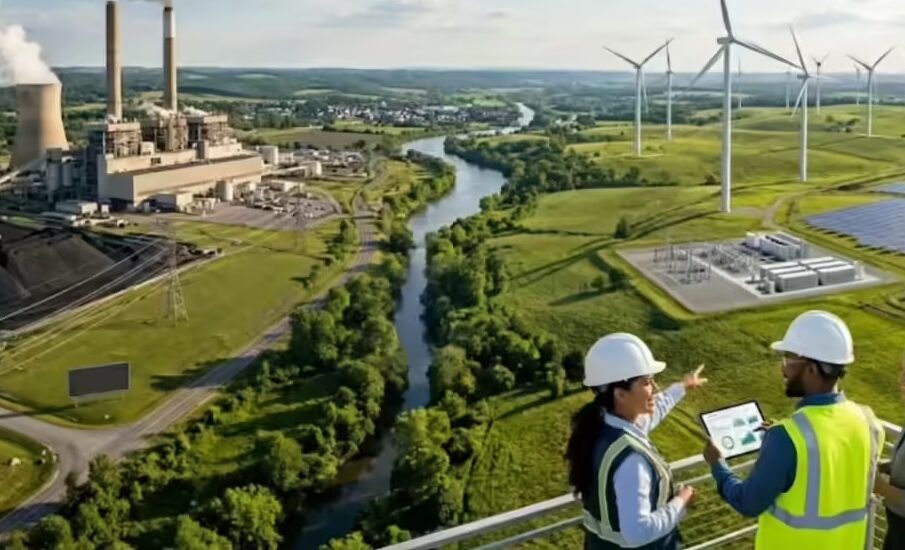
If you’ve spent any time looking at a sustainability report lately, you’ve probably seen the same claim over and over again: “We’re Carbon Neutral!” It sounds great on a LinkedIn banner, but behind the scenes, most of these companies are walking on thin ice. They’re dumping money into “green” projects, yet their actual carbon footprint isn’t moving an inch. Why? Because they’re using a 2010 strategy in a 2026 world.
The game has changed. Regulators are no longer accepting “vague vibes” as a substitute for hard data. Specifically, when it comes to Scope 2 emissions—the indirect emissions from the electricity you buy—there is a massive civil war happening between two financial instruments: Renewable Energy Certificates and Carbon Offsets. Most business owners think they’re the same thing. They aren’t. In fact, using the wrong one could get you flagged for greenwashing before your next quarterly audit.
In this guide, I’m going to strip away the jargon and show you exactly which tool actually slashes your Scope 2 footprint. We’re going to look at why RECs are the “secret weapon” for 2026 reporting and why Carbon Offsets are increasingly becoming a liability for your power-related claims. Let’s dive in.
The Scope 2 Problem: Your Utility is Your Carbon Anchor
First, let’s define the battlefield. Scope 2 emissions are unique because they represent energy you consume but don’t generate. If you run an office in a city where the local grid is powered by coal, your company is technically responsible for a portion of those coal emissions. You didn’t burn the coal yourself, but you paid for the result. This is the “indirect” part of the equation that makes Scope 2 so tricky to manage.
Historically, businesses tried to “offset” this by planting trees or funding clean cookstoves in other countries. It felt good, and on paper, it looked like the numbers balanced out. But in 2026, the Greenhouse Gas (GHG) Protocol—the people who basically write the rules for carbon accounting—has made it very clear that you cannot “offset” your way out of a dirty power bill. You need a tool that speaks the language of the electrical grid.
This is where the distinction becomes critical. An offset is a general “ton of carbon” from anywhere in the world. A REC, however, is a specific “megawatt-hour of green power” injected into the grid. If you want to claim you are using renewable energy, you need to prove it through the power tracking system, not through a forestry project in the Amazon.
What Are RECs, Really? (The Digital Receipt for Clean Power)
Think of the electrical grid like a giant swimming pool. Everyone is pouring water in—some from clean hoses (wind/solar) and some from dirty ones (coal/gas). Once the water is in the pool, you can’t tell which drop came from where. RECs are the solution to this “energy soup” problem. They act as the legal “proof of birth” for every single megawatt-hour (MWh) of renewable energy generated.
When a wind farm spins out 1 MWh of power, it creates two distinct things: the physical electricity and the “renewable attribute” (the REC). The electricity goes into the grid to keep the lights on, but the REC is sold separately. By purchasing and “retiring” RECs, your company gains the exclusive legal right to say that your electricity came from that wind farm. Without the certificate, you’re just using “average” grid power, regardless of what your marketing department says.
In 2026, this isn’t just a “nice to have” certificate. It is the only recognized way to report a “Market-Based” Scope 2 figure. If you consume 500 MWh of power and you retire 500 certificates, your Scope 2 emissions for that year are officially Zero. Try doing that with a carbon offset, and an auditor will laugh you out of the room. RECs provide the direct, 1-to-1 accounting link that modern ESG reporting demands.
The Carbon Offset Trap: Why “Carbon Neutral” is Dying
So, why are Carbon Offsets losing the war for Scope 2? It comes down to a concept called “Double Counting.” If a solar farm generates power, and you buy an “offset” from them, but someone else buys the REC, who gets to claim the green energy? The answer is the person with the REC. In the eyes of the law, the offset is just a donation to a project; the REC is the actual ownership of the energy’s environmental value.
Furthermore, carbon offsets have a serious “additionality” problem. In 2026, regulators are highly skeptical of projects that would have happened anyway. If a forest was already standing and you paid to “not cut it down,” did you actually reduce global emissions? Maybe, but it’s hard to prove. RECs, especially those from new “bundled” projects, provide a much clearer signal to the market that you are supporting the transition to a cleaner grid.
[Image comparing RECs vs Carbon Offsets for Scope 2 reporting]
For business owners, the “Carbon Neutral” label is being replaced by “Net Zero” and “100% Renewable.” The latter is much more powerful because it’s harder to fake. If you want to join the RE100 (the world’s most influential companies committed to 100% renewable power), you can’t use offsets to get there. You must use RECs. Offsets are becoming a “Scope 1 and 3” tool, while RECs have completely conquered Scope 2.
The “Market-Based” Method: The Secret to Slashing Your Footprint
In 2026, the gold standard for sustainability reporting is the “Dual Reporting” method. This means you report two numbers: the “Location-Based” total (what the local grid actually emitted) and the “Market-Based” total (what you chose to buy). This is where RECs perform their magic trick. Even if your office is in a region with a very dirty grid, your Market-Based report can show a 100% reduction in emissions if you match your usage with certificates.
This is a massive strategic advantage. It allows you to decouple your company’s growth from the slow-moving progress of your local utility company. You don’t have to wait 20 years for your state to retire its coal plants. By purchasing RECs today, you can instantly improve your ESG score, satisfy investor demands, and qualify for “green” supply chain contracts that require low-carbon operations.
But a word of warning: the “Vintage” of your RECs matters. In 2026, reporting standards have become stricter. You generally need to buy certificates that were generated in the same year (and often the same region) that you used the power. Buying 10-year-old credits from a different continent is a “red flag” for auditors. To truly slash your reported emissions, you need high-quality, contemporary certificates that match your real-world consumption patterns.
How to Implement a REC Strategy in 2026 (The Step-by-Step)
Ready to move beyond the carbon offset confusion? Here is the Brian Dean-approved blueprint for mastering your Scope 2 emissions. It’s not about spending the most money; it’s about being the most strategic with the data you have.
Step 1: Get Your “MWh” Number
Grab your utility bills from the last 12 months. Ignore the dollar amount for a second and look for the total Megawatt-hours (MWh) or Kilowatt-hours (kWh). This is your target. You need one REC for every 1 MWh of power you used.
Step 2: Choose Your Source
Do you want “National Wind,” which is the most cost-effective? Or do you want “Local Solar,” which has a much better marketing narrative for your customers? In 2026, “Impact RECs”—those that come from new projects or community-based solar—are the ones that carry the most weight with ESG investors.
Step 3: Retire and Report
Don’t just buy the certificates; make sure your vendor “retires” them in your company’s name in a recognized registry (like M-RETS or NAR). Once retired, you get a certificate of proof. This is your “smoking gun” for your annual report. You can now officially subtract those MWh from your Scope 2 total, bringing your Market-Based emissions down to zero.
The Final Verdict: RECs Are the 2026 Standard
The era of “buying a few trees and calling it even” is over. If you want to actually move the needle on your Scope 2 emissions, you have to play the game by the grid’s rules. Carbon offsets are a great supporting tool for your travel and shipping, but they are a liability if you try to use them for your electricity claims.
By shifting your budget to RECs, you aren’t just “looking green.” You are participating in the global system that tracks and incentivizes renewable energy production. You’re giving your auditors exactly what they want: a verified, 1-to-1 link between your consumption and a clean energy source. In the hyper-competitive world of 2026 business, that level of transparency isn’t just good for the planet—it’s a massive competitive advantage.