
Some Hurricane Preparation Happens Months Before Anyone Watches the Weather
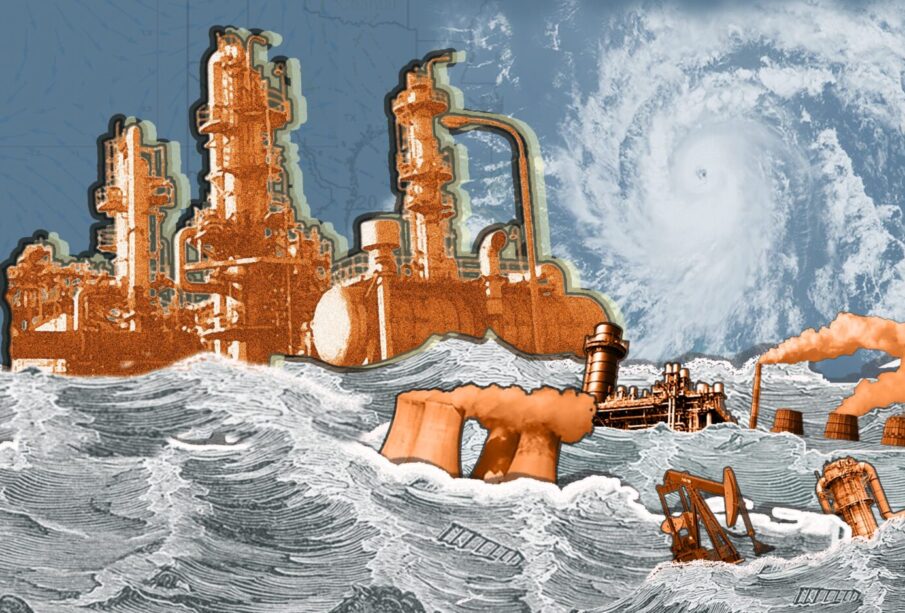
By the time a tropical system appears on a weather map in the Gulf, the preparation window for many industrial maintenance projects has already closed.
A terminal operator can secure loose materials, review emergency procedures, adjust product levels and prepare personnel as a storm approaches. Replacing a deteriorated floating roof seal, fabricating a tank nozzle, modifying a platform or producing an unusual replacement component requires a much longer runway. Engineering questions have to be answered. Measurements need to be verified. Materials have to be sourced. The part has to be fabricated and delivered. In some cases, installation has to fit around an outage or other operational constraint.
That is why some of the most useful hurricane preparation along the Texas Gulf Coast happens months before anyone begins watching the tropics.
Hurricane readiness sometimes begins with making a replacement part in February.
Hurricane Season Has a Long Runway
Atlantic hurricane season officially runs from June 1 through November 30, although the risk is not distributed evenly across those six months. The National Hurricane Center’s historical data puts the climatological peak on September 10, with most Atlantic tropical cyclone activity occurring between the middle of August and the middle of October.
NOAA’s updated 2026 outlook expects this season to finish below normal, with 7 to 13 named storms, 2 to 6 hurricanes and up to 2 major hurricanes. Seasonal forecasts say little about the ultimate risk to an individual facility, however. NOAA specifically cautions that these outlooks do not predict the location, timing or intensity of hurricane landfalls. A relatively quiet basin can still produce a consequential storm for the wrong stretch of coastline.
Houston-area tank owners have another reason to look carefully at their assets well before a weather threat develops. Texas is implementing its Aboveground Storage Vessel Safety Program for certain vessels of at least 21,000 gallons, or 500 barrels, at petroleum refineries, petrochemical plants and bulk storage terminals. The Texas Commission on Environmental Quality says the program addresses safety performance standards in addition to other applicable regulations, with the objective of protecting surface water and groundwater during accidents and natural disasters. Registration for covered facilities is due September 1, 2027.
TCEQ even held a Houston workshop in August 2026 to help facilities begin preparing for registration and certification. The timing reinforces a larger operational reality. Tank condition, maintenance records and compliance work deserve attention long before a storm is approaching Galveston or forecasters begin drawing possible tracks toward the upper Texas coast.
A Storm Can Expose a Maintenance Problem That Was Already There
Wind and heavy rain do not create every tank problem from scratch. Severe weather can put additional stress on components that have already spent years exposed to heat, moisture, product vapors, movement and normal industrial wear.
A floating roof seal may have deteriorated gradually. A platform may have corrosion that needs attention. A roof accessory may be nearing the end of its useful life. A nozzle or manway may require replacement as part of a larger maintenance project. Equipment changes around a tank can also create the need for modified access, new connections or components that differ from what was installed decades earlier.
Regular inspection is therefore part of the larger readiness picture. EPA guidance states that owners and operators of qualified facilities with aboveground oil storage containers must conduct regular integrity inspections in accordance with applicable industry standards. Texas requirements for certain floating-roof tanks in the Houston-Galveston area also address conditions such as damaged seals, gaps, tears and other deficiencies found during inspection.
Finding a problem early creates options.
Finding the same problem when a named storm is three days from the Gulf Coast creates a deadline.
The Replacement Part May Not Be Sitting on a Shelf
Aboveground storage tanks can remain in service for decades, and industrial facilities change considerably during that time. Original manufacturers disappear. Designs are modified. Operating conditions evolve. Piping configurations change. New equipment is installed around old equipment. Drawings may reflect a tank as originally constructed rather than every alteration made during its service life.
The result is an important distinction between maintaining a storage tank and maintaining a piece of equipment with standardized replacement parts. An operator may identify exactly what needs attention and still have to determine how the replacement will be designed and built.
This is where specialized shop fabrication in Houston can become part of hurricane-season planning well before hurricane season arrives. Tank fabrication shops can produce components for the dimensions and requirements of a specific vessel, including rolled and beveled plate, nozzles, manways, ladders, platforms, floating suctions, floating roof accessories and floating roof seals. Smaller tanks may even be completely fabricated in a shop and transported to the site.
The benefit of early planning becomes easy to see. If an inspection performed in February identifies a deteriorating component, the facility has time to review drawings, verify field dimensions, involve engineering when necessary, fabricate the replacement and coordinate installation. Waiting until late August compresses every one of those decisions into the busiest portion of hurricane season.
The Smallest Part of the Tank Can Become a Very Large Problem
Storage tanks are visually dominated by their shells and roofs, so it is easy to think of maintenance in terms of large pieces of steel. In practice, comparatively small components can have an outsized effect on operations.
Consider a floating roof. The roof itself may span a tremendous area, but seals and fittings around that roof perform specific functions that depend on proper fit and condition. EPA describes the rim seal system as the component that closes the space between the edge of a floating roof and the tank wall, while fittings penetrate the deck to serve various operational purposes. Texas rules for applicable floating roof tanks contain detailed requirements concerning seals, deck covers, gaskets, vents, roof drains and other openings.
Similar considerations apply elsewhere on the tank. A manway seems minor next to thousands of barrels of storage capacity, until a maintenance project requires access through it. A platform occupies little of the overall structure, yet employees and inspectors may depend on it to reach equipment safely. A nozzle may represent a tiny fraction of the steel in the tank while providing the connection required for an important process.
Good maintenance planning therefore gets surprisingly specific. The question may move from “Is this tank ready?” to “What condition is this particular seal, nozzle, platform, roof fitting or section of plate in, and what will we do if it has to be replaced?”
Those questions are much easier to answer before the weather becomes urgent.
Fabricating Indoors Also Moves Work Away From the Weather
Houston’s industrial facilities have another reason to fabricate as much as practical before components reach the field. A fabrication shop provides a controlled environment for work that would otherwise be exposed to the variables of an operating site and Gulf Coast weather.
Plate can be processed, components assembled and dimensional requirements checked before the finished piece arrives at the tank. That does not eliminate field work, and many storage tank repairs necessarily take place at the tank itself. It can reduce the amount of fabrication that has to be accomplished outdoors during a narrow maintenance window.
That distinction becomes valuable during a region’s wetter and more unpredictable months. Every task completed before a component reaches the field is one less fabrication step competing with site conditions, equipment availability and changing weather.
For projects planned well in advance, the schedule can also account for fabrication lead time rather than treating it as an emergency. Maintenance personnel can identify needs during inspections and coordinate components with upcoming outages or planned tank work.
Texas Is Giving Tank Owners Another Reason to Know Their Equipment
The state’s new ASVS program adds another layer to this conversation because covered facilities are being asked to compile detailed information about individual vessels. TCEQ’s registration guidance calls for information including vessel identification, construction dates, operating dates, design capacity, construction material and the standards applicable to each vessel. Those standards can include API 650, API 653, API Recommended Practice 2001, API 2350, portions of NFPA 30 and federal requirements.
For an older facility with many tanks, assembling that information can become more than an administrative exercise. It encourages owners and operators to look closely at what they have, how old it is, which standards apply and where future compliance or maintenance work may be necessary.
A facility that begins that work early has time to plan.
That planning can include identifying tank components that will require repair or replacement, reviewing old drawings against current conditions, gathering measurements and arranging custom fabrication before a maintenance deadline becomes an emergency deadline.
February May Be More Important Than the Five-Day Forecast
Hurricane preparation tends to become visible when people begin buying supplies, emergency operations centers activate and weather reports start discussing possible landfall locations. Industrial facilities along the Houston Ship Channel and throughout the Gulf Coast operate on a different timeline.
Some decisions made months earlier determine how prepared a tank will be when that moment arrives.
Inspecting equipment early enough to act on the findings matters. Keeping current drawings and records matters. Knowing which components are showing wear matters. Determining which replacement pieces can be purchased and which will need to be custom fabricated matters. Giving engineers, drafters, fabricators and maintenance teams enough time to do their work matters.
None of those activities depends on the path of the next hurricane.
They depend on recognizing that readiness has a lead time.
When hurricane season reaches its peak, a facility may be grateful for a repair that was completed in May, using a component that was measured in March and fabricated in February. The weather forecast might provide several days of warning before a storm reaches the Texas coast. The maintenance decisions that put an aboveground storage tank in a better position to face that storm can begin many months earlier.